


Faraday Box Signal Blocker Review: The Best Way to Protect Multiple Keyless Car Keys UK
Relay attacks now account for over 90% of keyless car thefts across the UK. If your household has multiple vehicles with keyless entry, you’re not just protecting one car—you’re protecting an entire collection of vulnerable keys that thieves can exploit in seconds.
Small Faraday pouches work well for single keys, but they create problems for households with multiple drivers. Keys get left out of pouches. Different family members forget to use them consistently. Pouches get lost or left in pockets when you need them most.
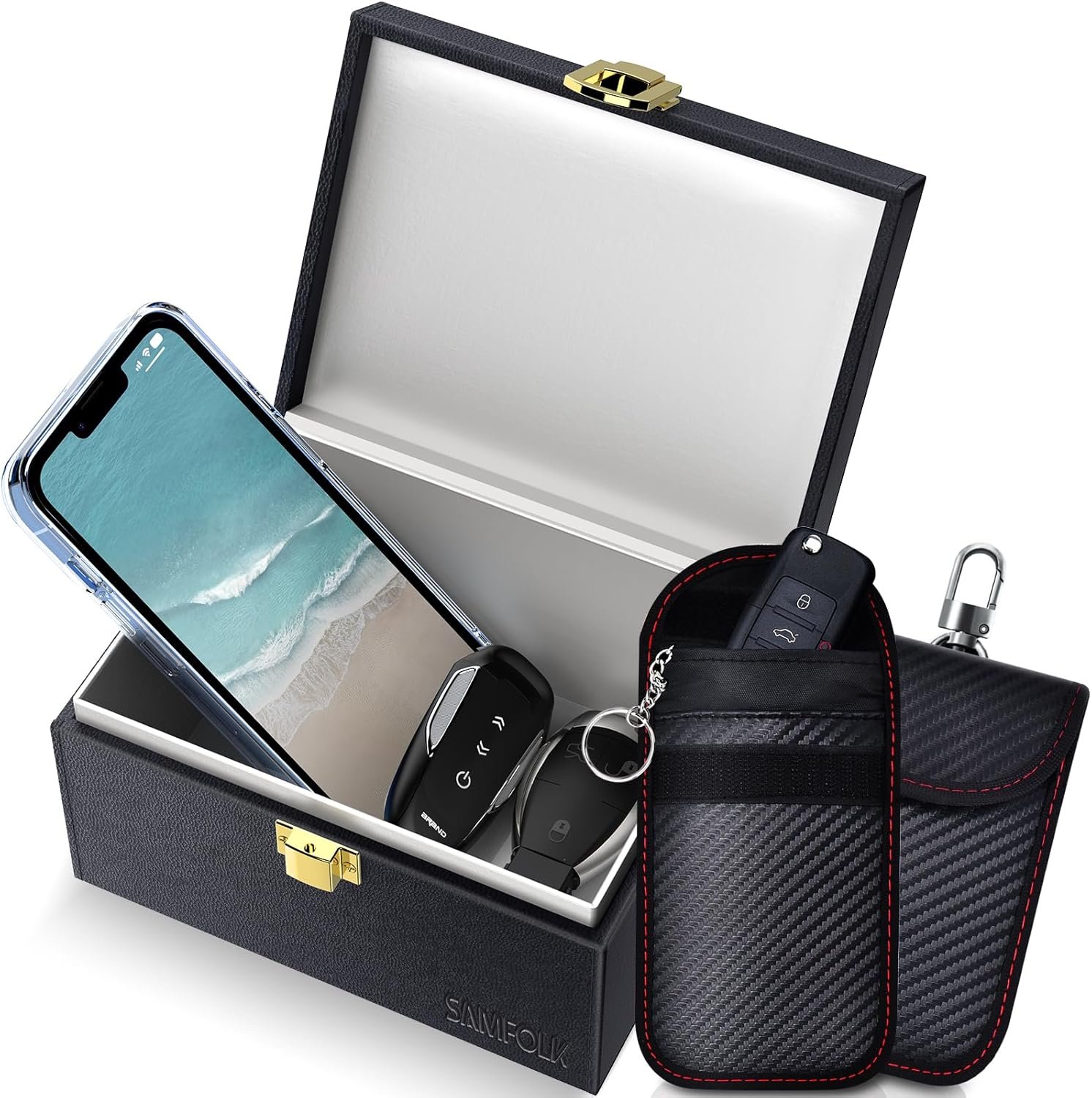
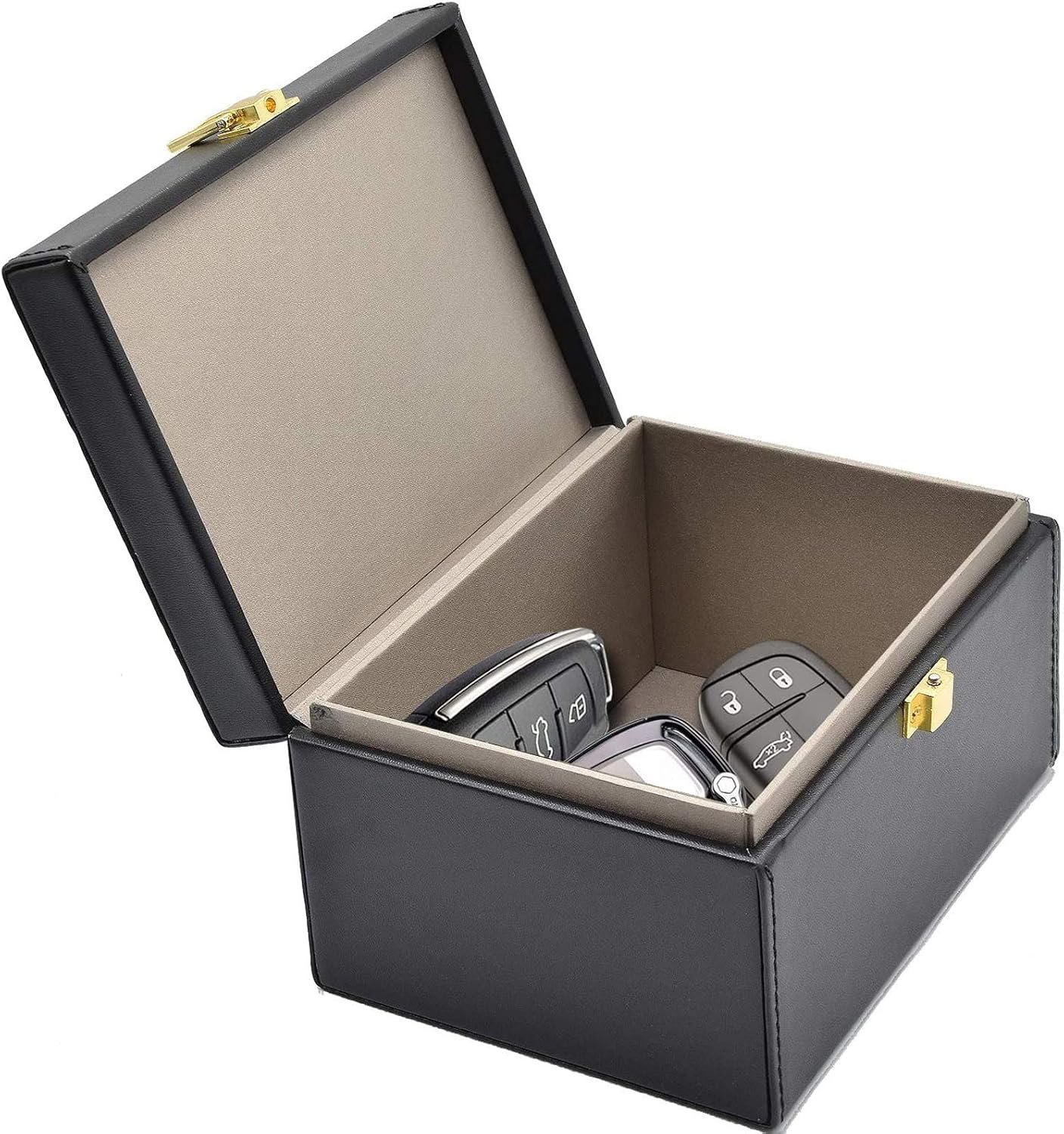
The Faraday Box Signal Blocker offers a different approach: a permanent home storage solution that protects all your keys in one secure location. This large RFID signal blocking safe sits in your hallway, and everyone in the household drops their keys inside when they come home.
But does a stationary box actually provide better protection than portable pouches? Is the larger size worth the higher cost? And will your household actually use it consistently enough to justify the investment?
View on Amazon
Why a Box Instead of a Pouch?
Understanding the fundamental difference between Faraday pouches and boxes helps determine which solution fits your specific situation.
Portable pouches require individual behaviour change. Every person who drives needs to remember to use their own pouch every single time. One forgetful family member leaves the entire vehicle vulnerable. Guests borrowing your car won’t know about or use the system.
A Faraday Box creates a single centralised protection point that everyone uses automatically. It becomes the household key storage location—just like a key bowl or wall hook—except this one blocks signals.
Multiple keys protected simultaneously. UK households increasingly have two, three, or even four vehicles. Each vehicle might have two key fobs for different drivers. That’s potentially eight keys requiring protection. Managing individual pouches for each key becomes impractical.
The large size of a Faraday Box accommodates multiple key fobs, house keys, access cards, and other RFID items all in one protected space. Drop everything in when you get home, retrieve what you need when leaving.
Permanent installation eliminates loss risk. Small pouches get misplaced, left in coat pockets, accidentally thrown away, or forgotten when travelling. A wall-mounted or countertop Faraday Box stays in a fixed location. You always know exactly where your protected keys are.
This permanence also creates stronger habit formation. The box becomes part of your home’s physical layout rather than an accessory you need to remember to use.
How Effective Is the Signal Blocking?
A Faraday Box uses the same electromagnetic shielding principle as pouches, but applies it differently.
The box construction includes conductive material lining the interior walls, base, and lid. When the lid closes properly, it creates a complete electromagnetic shield around everything inside. Key fob signals can’t escape. External relay devices can’t detect anything.
The larger size actually provides an advantage: thicker walls and more substantial shielding material compared to thin fabric pouches. This allows for multiple layers of protection and eliminates the signal leakage problems that affect poorly sealed pouches.
The critical factor is lid closure. Just like pouches only work when sealed, a Faraday Box only works when the lid is completely closed. A box left open or propped slightly ajar provides zero protection.
Quality Faraday Boxes include lid designs that ensure complete closure—magnetic catches, latching mechanisms, or weighted lids that close firmly. Budget options might have loose-fitting lids that don’t seal properly, compromising effectiveness.
Testing your box:
Place your key fob inside, close the lid completely, and walk outside to your car. Stand right next to the vehicle and try to unlock it using the proximity sensor or door handle. If the box works correctly, nothing should happen. The car shouldn’t respond at all.
If your car unlocks or shows any response, either the box isn’t sealing properly or the shielding material is inadequate. This simple test confirms whether your purchase actually provides protection.
Practical Size Considerations
The “large” designation means the Faraday Box accommodates multiple items, but size creates both advantages and constraints.
Capacity for household needs. Most large Faraday Boxes measure approximately 20-25cm length, 15-18cm width, and 8-10cm depth. This comfortably holds four to six car key fobs plus house keys, access cards, and other small items requiring RFID protection.
For typical UK households, this capacity exceeds what’s needed, which is ideal—you have room for guest keys, rental car keys, or future vehicle additions without replacing the box.
Counter space or wall mounting. Unlike pouches that tuck into drawers, a box requires dedicated space. You need a flat surface near your entrance where the box sits permanently, or wall-mounting capability if you prefer it off the counter.
The visible presence actually helps with habit formation. A conspicuous box by the door reminds everyone to use it, whereas hidden pouches get forgotten.
Aesthetic integration with home décor. A Faraday Box becomes part of your entryway furniture. Some models look professional and deliberate—like security equipment that belongs there. Others look industrial or temporary, which might bother people who care about interior design.
The appearance matters because if household members don’t like how it looks, they’ll find excuses not to use it consistently.
Building Household Habits
The biggest advantage of a Faraday Box is also its biggest challenge: it requires household-wide behaviour change, not just individual effort.
Creating the automatic routine. Most families find it takes about two weeks for “put keys in the box” to become truly automatic for all household members. During the transition period, keys end up in pockets, on counters, or in coat jackets despite the box being right there.
Positioning the box directly in the path people walk when entering helps. If everyone passes it before going further into the house, the visual reminder works better than a box tucked to the side.
The morning retrieval routine. Unlike pouches you carry with you, a box means you always retrieve your keys from the same location when leaving. This eliminates the daily “where did I put my keys?” search, which is surprisingly valuable beyond just security.
For households where different people leave at different times, the quiet lid closure matters. Metal boxes can clang when closed. Rubber-lined or magnetic closures operate silently, which matters for early-morning or late-night key retrieval when others are sleeping.
Guest and visitor management. When friends borrow your car or family visits with their own keyless vehicles, the box provides immediate protection for their keys too. You don’t need to explain complex pouch systems—just “put your keys in the box.”
When Boxes Work Better Than Pouches
Neither solution is universally superior—each fits specific situations better.
Faraday Boxes excel for:
- Multiple vehicle households where managing individual pouches becomes impractical
- Families with varying security awareness where centralised protection ensures everyone’s keys are safe regardless of individual habits
- People who value home organisation and want a permanent, designated key storage location
- Households with children or elderly members who might struggle with remembering pouch systems
Faraday Boxes have limitations for:
- Protection away from home. A box doesn’t help when you’re at the supermarket and thieves use relay attacks in the car park
- Rental properties or temporary living situations where permanent installation isn’t practical
- Small entryways with limited space where a large box doesn’t fit comfortably
- People who frequently lose or forget items and need keys physically attached to them
Many UK households find the ideal solution combines both: a Faraday Box for home protection and a small pouch for when you’re out. This provides continuous protection regardless of location.
What to Check Before Buying
Not all Faraday Boxes provide equal protection. Knowing what questions to ask prevents buying something that doesn’t work.
Shielding material specifications. Look for explicit mentions of copper mesh, conductive fabric layers, or military-grade shielding. Vague claims like “blocks signals” without material details suggest inadequate construction.
Lid closure mechanism quality. The seal between lid and base determines effectiveness. Magnetic closures, rubber gaskets, or overlapping edges provide better sealing than simple hinged lids with gaps.
Interior capacity measurements. Check actual dimensions, not just “large” descriptions. Measure your largest key fob and ensure the box comfortably accommodates it along with other items you plan to store.
Mounting or stability options. Countertop boxes need non-slip bases so they don’t slide when you open the lid. Wall-mount options need secure installation hardware that won’t damage walls or fail over time.
Testing certification or verification. Look for UK police approval (“Secured by Design”), independent testing results, or detailed user reviews that mention actual signal testing with vehicles.
Honest Limitations
Even quality Faraday Boxes have inherent constraints that affect their suitability for certain situations.
They provide zero protection when you’re away from home. The box protects keys stored inside it. Keys in your pocket while shopping remain vulnerable to relay attacks in car parks.
They require dedicated space in your home. Unlike pouches that store in drawers, boxes need permanent positioning that might not suit all living situations or interior layouts.
They don’t protect against all theft methods. Physical break-ins where thieves steal the entire box, or traditional theft methods that don’t rely on relay attacks, aren’t prevented.
They depend on consistent household use. One person leaving keys out defeats the entire system. This makes boxes less reliable in households where not everyone takes security seriously.
Despite these limitations, for home-based keyless entry protection in multi-vehicle UK households, Faraday Boxes remain one of the most practical solutions available.
Is This Investment Worthwhile?
Faraday Boxes cost more than individual pouches, so understanding the value proposition matters.
For single-vehicle households with one driver, a simple pouch probably makes more sense financially. The portability and lower cost suit simpler needs.
For households with multiple keyless vehicles, multiple drivers, or organisational challenges, a Faraday Box provides better long-term value. You’re protecting multiple keys simultaneously with one product that everyone uses automatically.
The security benefit is identical to pouches when used correctly—complete signal blocking that eliminates relay attack vulnerability. The advantage comes from ease of consistent use across multiple people and keys.
From an insurance perspective, demonstrating keyless entry protection through a permanent, household-wide system like a Faraday Box can strengthen claims that you take vehicle security seriously. Some insurers explicitly ask about such measures.
The real question isn’t whether signal blocking works—it does. The question is whether your household’s specific situation makes a centralised box more practical than individual pouches. For many UK families with multiple keyless cars, the answer is yes.