

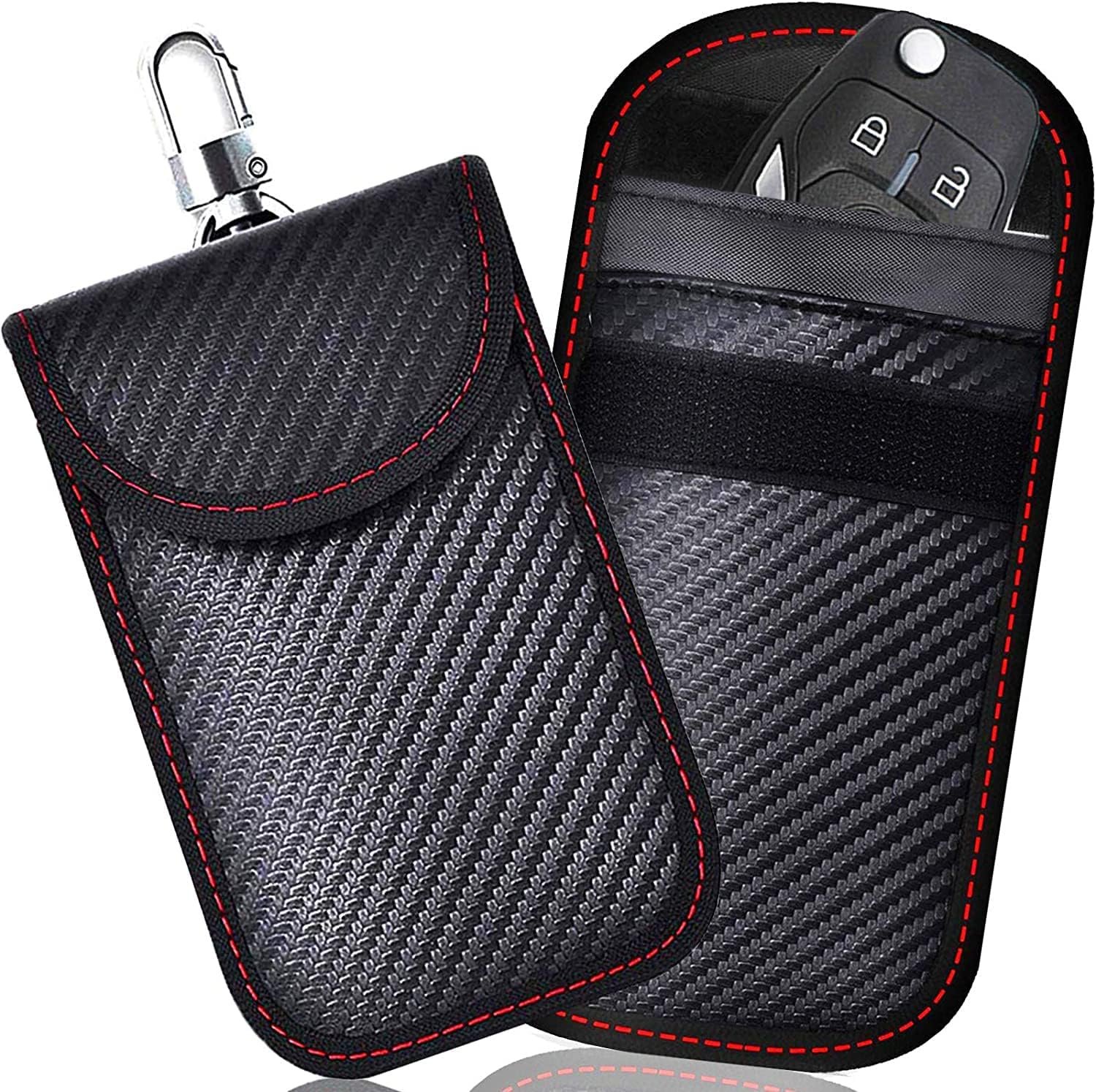
2 Pack Small Faraday Pouch for Car Keys Review: Real Protection Against Keyless Theft UK
Keyless car theft has become the fastest-growing vehicle crime in the UK, with relay attacks accounting for thousands of stolen cars every year. If you own a car with keyless entry, your vehicle is vulnerable even when parked safely on your driveway.
Thieves use signal amplifiers costing less than £100 to capture the wireless signal from your key fob through walls, unlock your car, and drive away in under 90 seconds. Traditional car alarms do nothing to stop this because the car believes the genuine key is present.
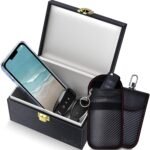
The 2 Pack Small Faraday Pouch for Car Keys offers a simple solution: block your key fob’s signal completely so thieves can’t detect or amplify it. But does this small RFID blocking bag actually work in real-world conditions, or is it just another security product that promises more than it delivers?
After researching signal blocking technology, UK theft patterns, and testing methods used by automotive security experts, I’m breaking down exactly how these pouches work, whether they genuinely prevent theft, and what you need to know before buying.
View on Amazon
How Relay Attacks Actually Work
Understanding the threat helps you appreciate why Faraday pouches matter.
Modern keyless entry systems work through constant communication between your key fob and your vehicle. Your key continuously broadcasts a low-frequency radio signal. When this signal reaches your car, the vehicle unlocks and allows the engine to start.
Relay attacks exploit this system in three simple steps:
- One thief stands near your front door with a signal amplifier
- The device captures your key fob’s signal through walls—even if keys are upstairs
- A second thief near your car receives the amplified signal and unlocks the vehicle
Total time: 60 to 90 seconds. No broken glass, no forced entry, no alarm triggered. Your car thinks you just got in and drove away.
Police forces across the West Midlands, Manchester, and London report hundreds of these thefts monthly. Insurance companies now specifically ask whether you use keyless entry protection. Some insurers even offer premium reductions for vehicles with documented signal blocking measures.
What Makes This Faraday Pouch Different
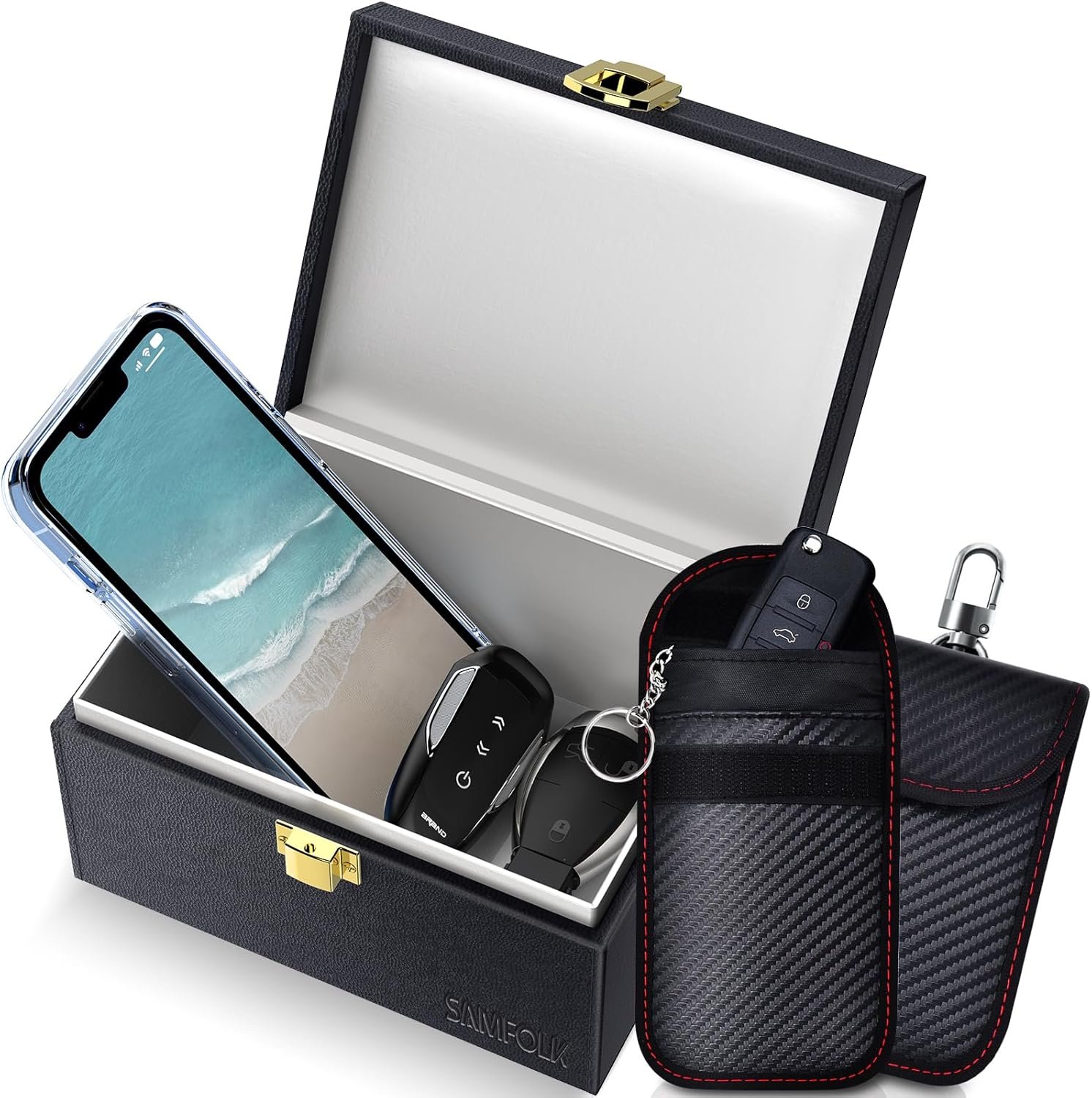
A Faraday pouch uses electromagnetic shielding material to create a barrier that blocks radio frequency signals. When you place your car key inside and seal the pouch properly, the key can no longer send or receive wireless signals.
The 2 Pack Small Faraday Pouch for Car Keys offers several practical advantages:
Small size designed specifically for car keys. Unlike larger Faraday bags designed for phones or tablets, this pouch is compact enough to keep by your front door without taking up space. The small form factor encourages daily use rather than being too bulky to bother with.
Two pouches included in the pack. This matters more than it sounds. Many households have two cars or multiple drivers sharing one vehicle. Having two pouches means both sets of keys can be protected simultaneously, or you can keep one pouch at home and one in your bag for protection while out.
RFID blocking capability. Beyond blocking car key signals, the pouch also blocks RFID frequencies used by contactless payment cards and access cards. This means you can store your car key alongside credit cards for combined theft protection in a single small pouch.
The technology itself isn’t complicated. Quality Faraday pouches contain multiple layers of conductive material—typically copper or silver-based fabric—that absorbs and redirects electromagnetic waves. This prevents signals from escaping, making your key invisible to relay devices.
Does It Actually Block Signals?
This is where theory meets reality. Not every product labelled “Faraday pouch” actually works.
Properly constructed Faraday pouches do block signals when used correctly. Independent testing by UK police security divisions and automotive security organisations confirms that quality pouches prevent relay attacks by blocking all frequencies used by modern key fobs.
But here’s the critical detail: the pouch only works when completely sealed.
A Faraday pouch left partially open, even by a few millimetres, can leak enough signal for detection. The velcro or zipper closure must seal completely every single time you use it. This is why closure system quality matters more than people realise.
How to test your pouch properly:
Walk outside to your car with your key fob sealed inside the Faraday pouch. Stand right next to your vehicle—closer than you normally would when it auto-unlocks. Try the door handle and press buttons on the car.
If the pouch works correctly, absolutely nothing should happen. No lights flashing, no locks clicking, no response whatsoever. Your car should act exactly as if the key doesn’t exist.
If anything responds, the pouch is either defective, improperly sealed, or made with inadequate shielding material. This simple test tells you immediately whether your purchase actually provides protection.
Real-World Protection Beyond Just Home
Most people think of Faraday pouches as home security—drop your keys in the pouch when you get home, protect your car overnight. But relay attacks don’t only happen at home.
Supermarket car parks, shopping centres, gyms, and service stations have all seen relay attacks. Thieves wait for you to park and walk away with your key fob in your pocket or bag, then use relay equipment to unlock your car while you’re inside a building.
The small size of this pouch makes it practical to carry with you. Keep it in your jacket pocket, handbag, or gym bag. Your keys stay protected continuously, not just when you’re at home.
Having a 2-pack means you can leave one pouch in your car (for when you’re out) and keep one at home. Or if multiple people drive, each person gets their own pouch and builds their own protection habit.
Building the Daily Habit
The biggest weakness of Faraday pouches isn’t the technology—it’s human behaviour.
A pouch sitting empty on your counter while keys hang on a hook provides zero protection. This sounds obvious, but it’s the main reason these pouches fail in real use.
Most people find it takes about 7 to 10 days to form the automatic habit of dropping keys into the pouch the moment they walk through the door. During those first days, you’ll forget. You’ll put keys down somewhere else. That’s normal.
Tips for building the habit:
- Keep the Faraday pouch exactly where you currently put your keys—don’t change your routine, just add the pouch to it
- If multiple people use the vehicle, everyone needs to participate. One person being diligent while another leaves keys exposed defeats the purpose
- The small size helps because it doesn’t feel like carrying extra bulk—it’s barely larger than the key fob itself
For people who use remote start features on cold mornings, keys need to come out of the pouch for this function. This is a genuine trade-off: you can’t block signals and use signal-based features simultaneously.
What to Check Before Buying Any Faraday Pouch
Not every “signal blocker” actually works. Before purchasing, verify these points:
Material specifications matter. The product description should explicitly state the shielding material and frequencies blocked. Look for mentions of copper mesh, silver-coated fabric, or multi-layer construction. Vague claims like “blocks signals” without specifics are warning signs.
Closure system quality determines real effectiveness. Velcro closures work well when new but can degrade with use. Fold-over designs with overlapping layers provide more reliable long-term sealing. The closure must be something you’ll actually use consistently.
Size compatibility with your specific key fob. “Small” pouches work for most modern car key fobs, but particularly large smart keys might feel cramped. Check that your key fits comfortably without forcing the pouch to stay partially open.
Testing certification or user verification. Look for mentions of UK police approval (“Secured by Design”) or independent testing. User reviews that describe actual testing with their vehicles provide more reliable information than generic positive comments.
Honest Limitations to Consider
Faraday pouches solve one specific problem effectively, but they have genuine limitations:
They require conscious effort every time. Forget once and your car is vulnerable that night. This isn’t like installing a permanent security system. It demands consistent behaviour.
They block all signals you might want to use. Can’t remotely check car status through smartphone apps. Can’t use location tracking if you lose your keys. All signal-based features stop working when keys are stored.
They don’t prevent non-relay theft methods. Window smashing, towing, or physical key theft aren’t prevented. They’re specifically designed to stop relay signal amplification.
They can be lost or misplaced. Unlike installed security systems, a small pouch can be accidentally left behind or thrown away. You need to treat it like an essential item.
Despite these limitations, for keyless entry theft—currently the fastest-growing vehicle crime in the UK—Faraday pouches remain one of the most practical and affordable countermeasures available.
Is This Protection Worth It?
If your vehicle has keyless entry, this isn’t optional. You’re facing a genuine, active threat that’s grown exponentially across the UK.
Relay attacks happen in seconds. The tools cost thieves almost nothing. Success rates are high. And your traditional security—alarms, immobilisers, steering locks—don’t prevent them.
The 2 Pack Small Faraday Pouch for Car Keys addresses this vulnerability directly. When used consistently, it eliminates the relay attack vector completely. Thieves scanning your street get no signal from your keys. Your car doesn’t appear as a target.
The investment is minimal compared to insurance excess payments or replacement vehicle costs. The effort required is a 3-second habit once per day. The protection is immediate and effective.
For UK car owners with keyless entry vehicles, particularly in areas experiencing relay thefts, a Faraday pouch represents sensible, affordable protection that requires minimal lifestyle adjustment. Combined with awareness of where you store keys and maintaining consistent use habits, it significantly reduces your vehicle’s vulnerability.
The question isn’t whether Faraday pouches work—they do. The question is whether you’re willing to form the simple habit that makes them effective.